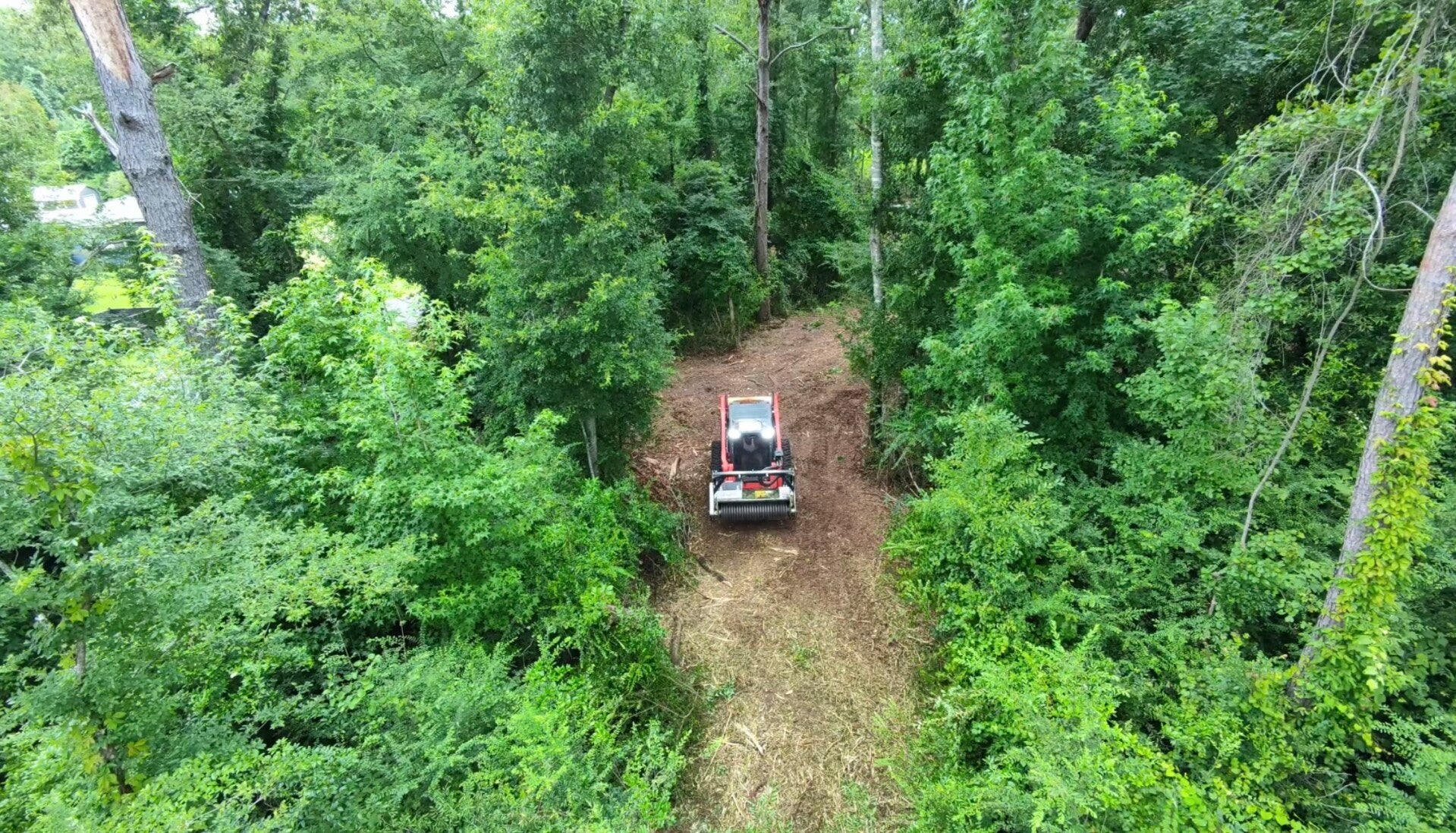
Forestry Mulching Across Northwest Louisiana
High-speed land clearing that processes standing brush, briars, and saplings into a clean layer of organic mulch right on your property. Serving Shreveport, Bossier City, Keithville, and DeSoto Parish—we eliminate heavy hauling fees while protecting topsoil stability.
Understanding Forestry Mulching
Forestry mulching is a highly efficient, single-step land clearing method that processes standing vegetation right where it grows. Using a high-performance track loader equipped with a specialized drum mulcher, we shred thick brush, wild briars, and saplings into a clean, uniform layer of wood chips.
Unlike old-school excavation that relies on massive burn piles or expensive log hauling, this process leaves no waste behind. The resulting mulch layer blankets the ground, offering instant stabilization against soil erosion, naturally choking out invasive weed growth, and eventually decomposing into rich organic matter for your land.
Why Choose Forestry Mulching?
It is the fastest, most cost-effective way to reclaim your land. Serving Northwest Louisiana, our mulching process eliminates the extra expenses of log hauling and dump runs by shredding vegetation right where it stands. You’re left with a clean, beautifully manicured finish that prevents topsoil washouts and suppresses aggressive weed regrowth from day one.
Why Landowners Choose This Method
Rapid Execution
Trims down labor and machinery costs by combining cutting and spreading into one seamless step.
Soil Protection
Returns organic matter to the ground rather than leaving a stripped, muddy footprint.
No Hidden Fees
Zero trucking overhead, zero landfill tipping charges, and no permit hassles.
Fire-Safe
Completely eliminates the liability, smoke, and scheduling delays of large burn piles.
Erosion Control
Creates an instant organic barrier that anchors loose topsoil on slopes and banks.
Premium Finish
Delivers a clean, uniform look that instantly makes raw acreage look highly valuable.
Where Our Mulching Machinery Shines Best
Forestry mulching is the fastest, cleanest way to tackle tough vegetation, but it helps to know exactly where this method beats traditional clearing. We routinely deploy our mulchers for:
-
Property Reclamation: Restoring overgrown or abandoned land.
-
Easement Maintenance: Clearing right-of-ways and access corridors.
-
Fence Line Clearing: Removing problematic brush along borders.
-
Hunting & Recreation: Cutting woods trails and recreational paths.
-
Food Plot Construction: Prepping raw ground for wildlife habitat.
-
Pasture Reclamation: Expanding open grazing fields and acreage.
-
Timber Stand Thinning: Managing aggressive underbrush below the canopy.
-
Wildfire Defensible Space: Creating protective fire breaks.
-
Light Construction Prep: Clearing heavy surface cover for new builds.
Knowing When to Skip the Mulcher
Forestry mulching is an incredible tool, but it isn’t a one-size-fits-all solution. There are times when bringing in traditional heavy equipment for full land clearing and hauling makes the most sense. We usually recommend a traditional approach if:
- Subgrade Construction Prep: Your project requires completely bare, stripped, and leveled dirt to pour heavy concrete foundations.
-
Large Timber Removal: The land features massive, mature trees that surpass standard mulching machine capacities.
-
Complete Stump Extraction: Stumps and root balls must be entirely grubbed and removed from the soil for structural integrity.
-
Commercial Timber Harvesting: You intend to log, harvest, or sell the standing timber on your property rather than process it.
We aren't here to force a single method on you. We’ll look at your project goals together during the estimate and layout a plan that actually fits your build.
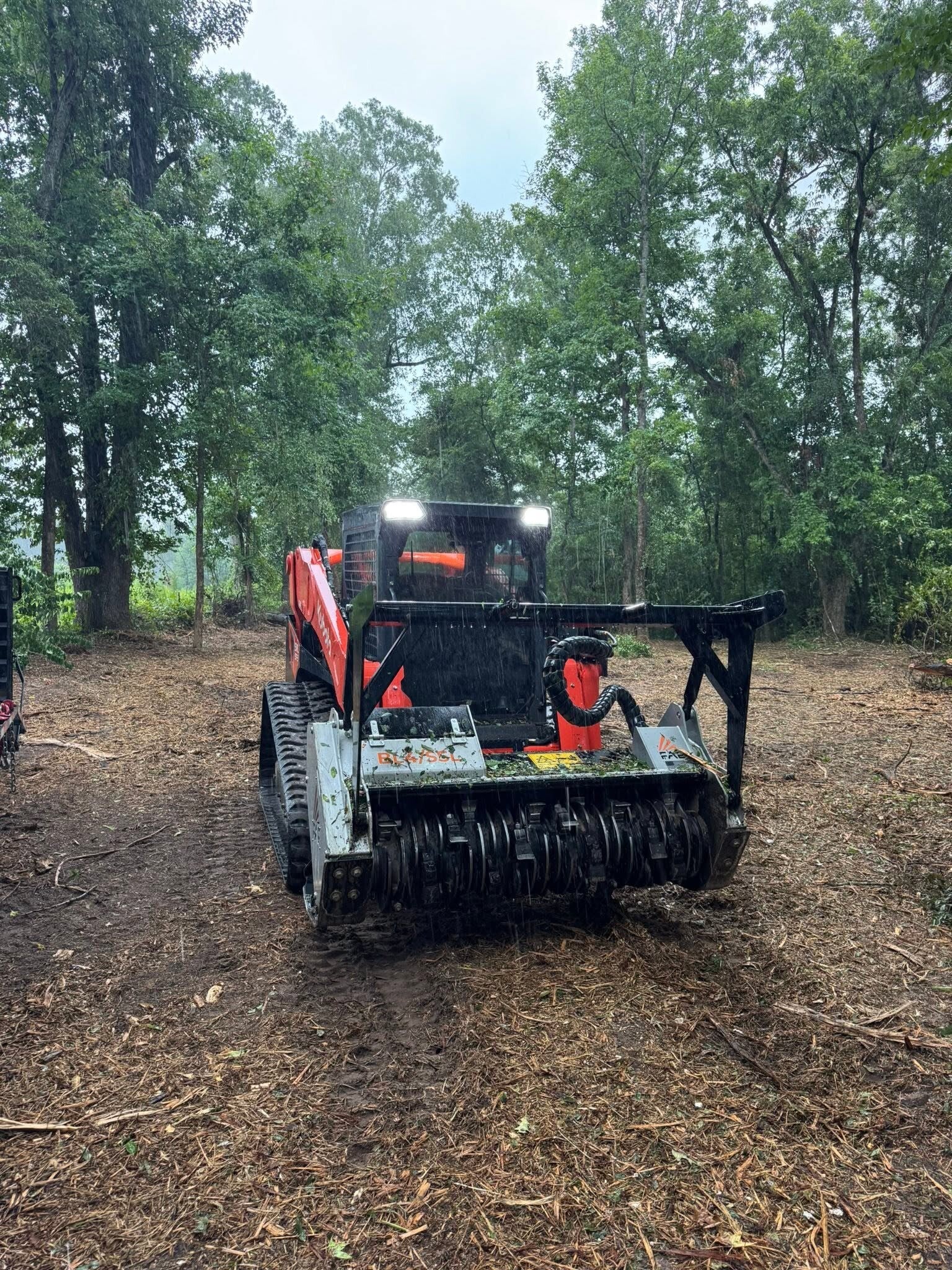
The Gear Behind Our Land Clearing
We don't rely on light-duty farm implements. Our setup features dedicated, high-flow forestry mulching heads on rugged track machines built to shred dense Southern vegetation. Here is what our equipment handles daily:
-
Thick brush, wild briars, and heavy undergrowth of any density.
-
Standing timber and volunteer saplings up to 6 inches in diameter.
-
Tangled vine networks, stubborn brambles, and invasive species.
-
Soft, muddy, or unlevel ground where standard wheeled equipment gets stuck.
-
Tight spaces, residential property lines, and selective clearing projects.